Ophthalmology patients used to have trouble finding parking spaces — and it had nothing to do with their eye sight. Ease of access is just one of many new features offered at the center's new home.
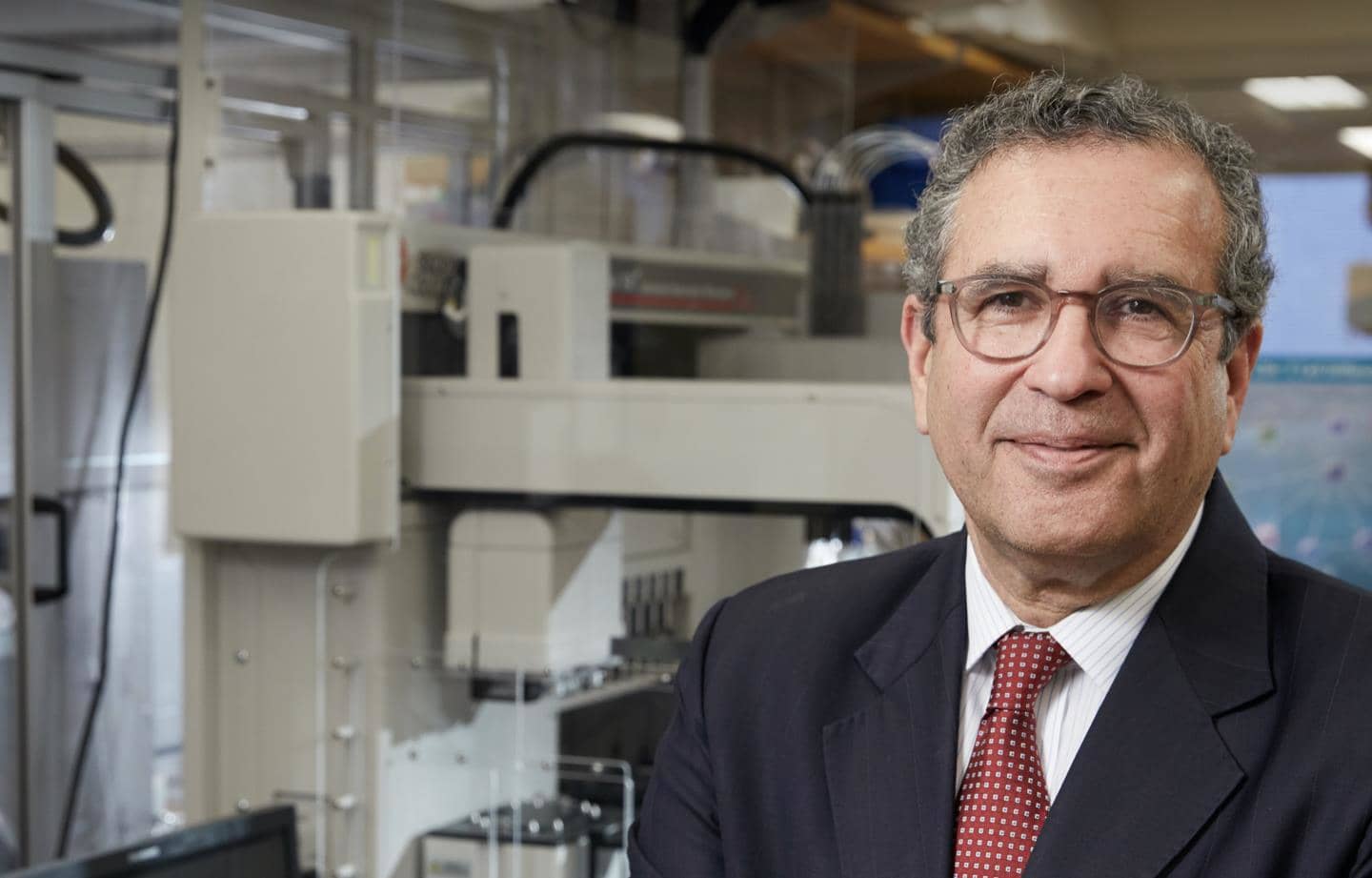
[February 2008] Department Chair James Tsai, MD, MBA, a glaucoma specialist, guided the Ophthalmology Department’s move from its cramped quarters in the Boardman Building to new, spacious offices in the Temple Medical Center, where ample parking is just the beginning.
You can have the best practice in the world, but sometimes success in the clinical realm can hinge on less remarkable factors.
Parking, for example.
That was part of the thinking that went into the Yale Eye Center’s move in October from its longstanding home in the Boardman Building on Cedar Street to the third floor of the Temple Medical Center a few blocks away.
“We want to be the premiere eye care center for the state of Connecticut, if not the entire Northeast, and we realized that we had to make it easier for patients to travel to see us,” says ophthalmologist James Tsai, Robert R. Young Professor and department chair since October 2006. “Temple Medical Center has valet parking, the Temple Medical Center Garage and the Temple Street Garage. While parking might not be the most important thing, patients tell us it is crucial for them to be able to access our state-of-the-art medical care.”
Once patients reach the Eye Center, a group of highly skilled ophthalmologists and advanced technology unavailable anywhere else in the state await them. Since Tsai’s arrival at Yale 15 months ago, he has doubled the number of full-time faculty clinicians in the department, from five to 10, and acquired new diagnostic and operating equipment, including cutting-edge instrumentation to image and treat eye disorders.
Among the tools now available at Yale are:
The move to Temple Medical and the larger full-time faculty have enabled Tsai to expand the Eye Center’s capacity. The new facility has 28 examination rooms, compared to 18 in the previous space, and patient visits have increased slightly over the past year, to 20,000 annually. “We hope to increase patient volume dramatically over the next several years,” says Tsai.
In addition to the Temple facility, the faculty sees patients at a hospital-based eye clinic that is moving from the Boardman Building to Dana 2. Faculty members teach at the Temple Street practice, Yale-New Haven Hospital, the VA Connecticut Healthcare System in West Haven, and at the Hill Health Center on Columbus Avenue, where they provide affordable care for disadvantaged patients. The department has moved its basic science research operations--which have produced major recent findings, including the identification of genes for macular degeneration--to newly renovated space at 300 George Street.
Patients have followed Tsai to New Haven from his old practice in New York City (a glaucoma specialist, he was on faculty at Columbia University’s College of Physicians and Surgeons before coming to Yale), and Tsai envisions more patients coming from out of state as the reputation of the center grows.
The center currently has full-time clinicians offering specialized care in glaucoma, retina and vitreous diseases, cataract surgery, uveitis, oculoplastics and orbital surgery, pediatrics and strabismus surgery, and primary eye care. It is recruiting more specialists in cornea and external disease, refractive surgery, neuro-ophthalmology, and ocular oncology.
Photo by Robert A. Lisak