Yale Medical Group
1-877-YALEMDS

Finding cardiomyopathy while it can still be treated

Doctors in the cardiomyopathy clinic within the Yale Heart Failure and Transplant Program want to use early detection and follow-up to reduce sudden cardiac death cases to zero.

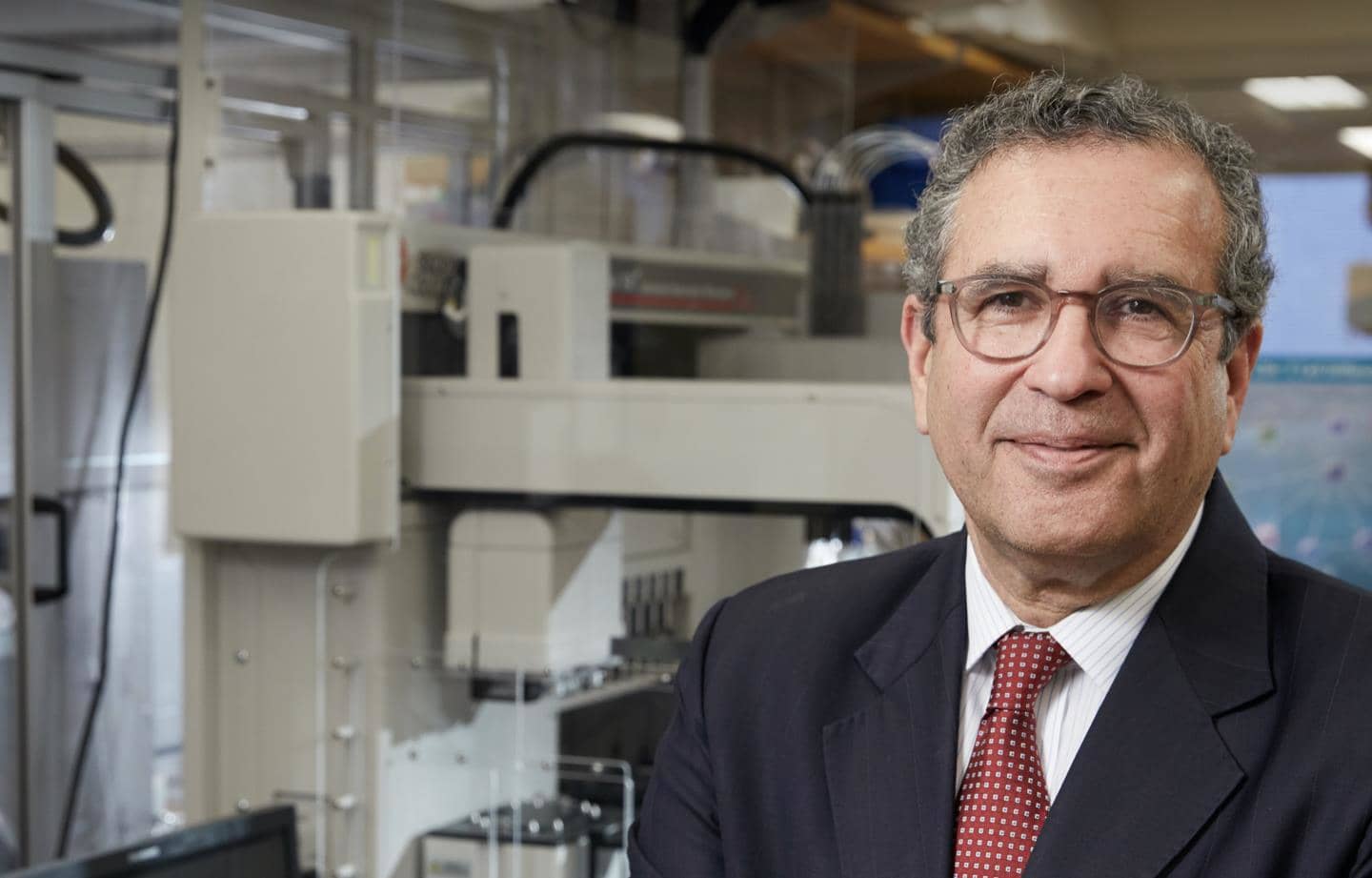
Drs. William McKenna (left) and Daniel Jacoby look at test results that will help determine a young patient’s diagnosis.

Drs. William McKenna (left) and Daniel Jacoby look at test results that will help determine a young patient’s diagnosis.

(August 2011) Christian Thwaites is the CEO of a financial company, but running is his family’s passion. He wondered if he could continue when he was diagnosed with atrial fibrillation, then found he could avoid dangerous cardiac flutters with medication. Years later, one of his sons—both are runners—began having blood pressure spikes when he hit his maximum speed.

Stories of athletes collapsing on the field drove the family to the cardiomyopathy clinic within the Yale Heart Failure and Transplant Program, where doctors look for genetic heart muscle diseases caused by errors in the DNA. Now Thwaites is waiting for test results to see if he has a cardiomyopathy mutation. His son was given a clean bill of health for his college track and cross country teams. “The doctor was very good at understanding how important quality of life is to a young man,” said Thwaites.

Preventing sudden death

Dr. Jacoby (right) talks to a patient about his symptoms. The team can usually help patients who check out the problem early.

Dr. Jacoby (right) talks to a patient about his symptoms. He can usually help patients who check out the problem early.

For Daniel Jacoby, MD, the Thwaites are a success story because they checked out the problem early, and they will know from Christian Thwaites’ results whether other family members should be tested. Dr. Jacoby’s goal is to help families understand their risk for one of several different types of familial cardiomyopathies that cause the heart to lose its ability to pump blood effectively and that are potentially fatal.

“We want to reduce the incidence of sudden cardiac death to as close to zero as possible, and to delay the onset of symptomatic and advanced heart failure,” Dr. Jacoby says. “These are not rare conditions. They’re relatively common, and a doctor with the proper expertise can monitor these patients on an annual or semi-annual basis, in a simple, non-invasive way.”

Dr. Jacoby directs the clinic with support from William McKenna, MD, a world expert from Great Britain, who participates thanks to a partnership between Yale and University College London (UCL). They work with a multidisciplinary team to provide genetic counseling, gene testing, family analysis, expert diagnosis and medical management, cardiac imaging, stress testing and psychological care.

“One of the motivating factors in setting up the clinic is that there are few, if any cardiomyopathy clinics like this,” says Dr. McKenna, director of the Institute of Cardiovascular Science and the Cardiovascular Program at UCL. “There are individual physicians and scientists who are world class and world famous in their fields, but most don’t run clinics that include teams of genetic counselors and other specialists. In this program, we can legitimately say we can almost always deal with whatever comes up. There are some conditions that are quite difficult, but in general, if we catch it, we can deal with it.”

Patients are surprisingly young

Drs. McKenna and Jacoby look on as Margretta Seashore, MD, discusses the results of a patient’s genetics test.

Drs. McKenna and Jacoby look on as Margretta Seashore, MD, discusses the results of a patient’s genetics test.

Cardiomyopathy affect one in 500 American adults and children—athletes and non-athletes alike. Yale Medical Group doctors see patients from throughout the region and around the country. Christian Thwaites visits when he’s driving from Vermont to New York for business, and Dr. McKenna has a patient who he first saw in London, who now flies to New Haven from Alaska to see him.

Dr. Jacoby sees every new patient, often consulting with Dr. McKenna by e-mail or in real time using video conferencing technology. Dr. McKenna visits New Haven several times a year to see patients in person. In addition, the multidisciplinary team of physicians includes geneticist Margretta Seashore, pediatric cardiologist Kevin Hall, and adult cardiac specialists Joseph Brennan, Jude Clancy and Michael Cleman.

New patients provide a detailed family history and undergo a physical examination by a cardiologist, including an electrocardiogram and echocardiogram. Some get an MRI and stress test. Depending on the diagnosis, they may be monitored in follow-up visits, given medications to improve heart function or reduce symptoms, or, in critical cases, be referred to a Yale specialist for an ablation procedure or defibrillator placement.

Checking the family tree

Prevalence of heart problems in the family tree, or even signs and symptoms of the cardiomyopathy alone provide clues to a genetic diagnosis. Those patients see Dr. Seashore, director of the Genetic Consultation Service for Yale Medical Group. Her ability to help define or exclude a genetic cause using a blood sample varies with the many types of cardiomyopathy.

“In some patients, the mutations are very predictive; in others it may be a case of more than one gene collaborating and an individual mutation may not be predictive,” Dr. Seashore says. “We hope to provide patients and families with useful information to help them plan their medical care and provide information to other family members who may be at risk. The other thing we are doing is looking for new mutations and new genes using newer genetic technology such as whole exome sequencing. These are things we want to clarify with the research studies.”

Both Dr. Jacoby and Dr. McKenna are also conducting research they expect will improve clinical care over time. In the meantime, Dr. Jacoby has a straightforward message for patients: “If you have someone close to you in your family, your mother, brother, son or daughter who developed heart disease at a young age, you should be screened by someone who knows what they’re looking for.”

Story by Kathy Katella
Photos by Robert Lisak

Yale Cardiomyopathy Clinic

Yale Physicians Building
800 Howard Avenue
2nd Floor
New Haven, CT 06519

Contact Us
Appointments: 203-785-7191
Fax: 203-785-2917


How Yale is collaborating
across the Atlantic

Dr. William McKenna’s trips across the Atlantic Ocean is a result of a larger Yale University and University College London (UCL) transatlantic partnership in biomedical research and clinical care.

The collaboration is the brainchild of Yale’s Michael Simons, MD, and UCL’s John Martin, MD, both distinguished heart researchers and physicians. In addition to exchanging expert physicians to treat individual cases at each site, collaborators expect to use telemedicine technology to share clinical information and expertise among themselves, and eventually with other institutions around the world.

Dr. McKenna hopes the partnership will not only help patients in the Yale cardiomyopathy clinic, but also contribute to the development of device-manufacturing businesses in Europe, where he says it is easier to test new products such as valves and stents that make it easier to treat heart disease.


Additional information


Symptoms of cardiomyopathy

Cardiomyopathy differs from many of the other heart disorders in that it often occurs in young people, it tends to be progressive and worsen quickly, and it may be related to diseases involving other organs. People with cardiomyopathy may never notice any symptoms or may experience them only late in their disease. Those symptoms may include:

  • Arrhythmias (irregular heartbeats)
  • Chest pain, especially after physical exertion or heavy meals
  • Dizziness
  • Fainting during exercise
  • Fatigue
  • Lightheadedness
  • Shortness of breath or trouble breathing, especially with physical exertion
  • Swelling in the ankles, feet, legs, abdomen and neck veins


Yale School of Medicine
Contact Us Intranet Privacy Policy Site Editor
© 2013 Yale School of Medicine
Yale School of Medicine